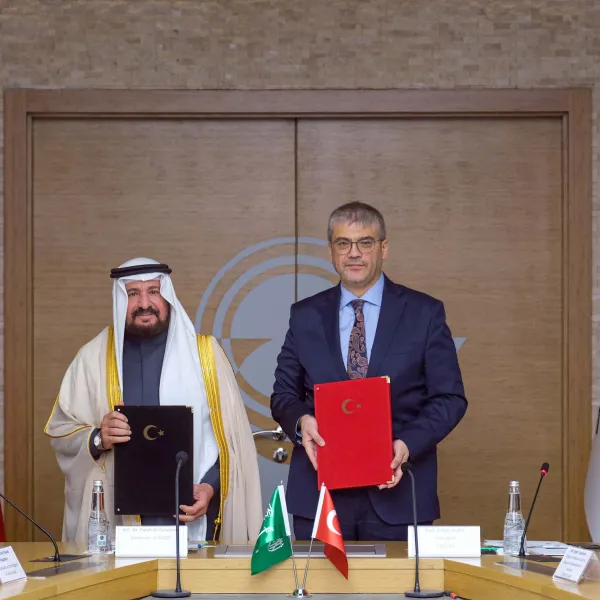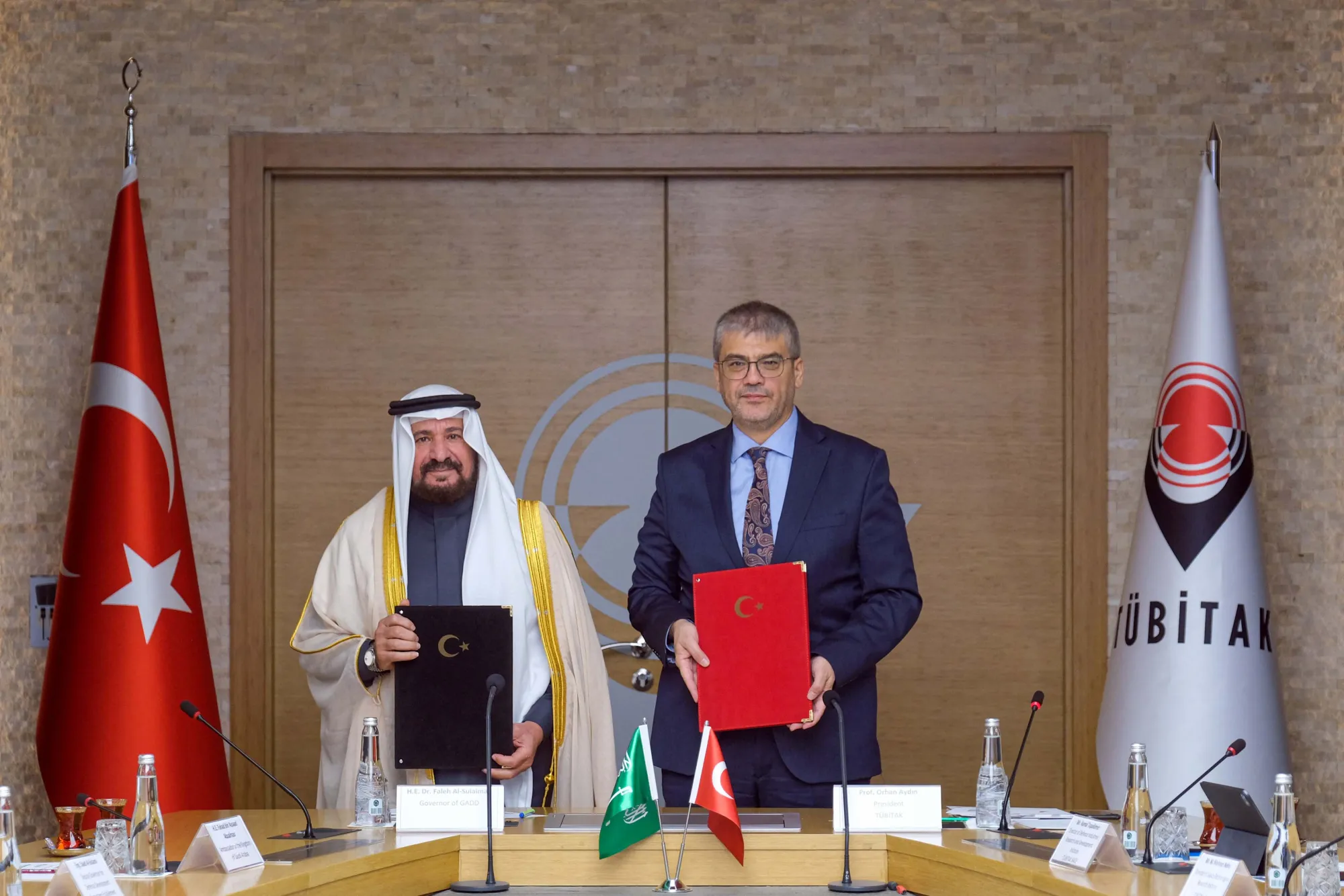
The Memorandum of Understanding (MoU), aimed at strengthening cooperation between TÜBİTAK and the General Authority for Defence Development (GADD) of Saudi Arabia in research, development and innovation activities in the field of defence technologies, was signed in Ankara on 26 November 2026 by TÜBİTAK President Prof. Dr Orhan Aydın and GADD Governor Dr Faleh Al-Sulaiman.
In his opening remarks at the ceremony, TÜBİTAK President Prof. Dr Orhan Aydın emphasised that the relations between Türkiye and Saudi Arabia, which have gained considerable momentum in recent years, have created new opportunities for cooperation in the fields of defence, industry and advanced technologies. Highlighting the shared priorities of Türkiye's National Technology Initiative and Saudi Arabia's Vision 2030 in terms of advancing technological capabilities, Aydın stated that the ultimate objective was to translate the Memorandum of Understanding into tangible projects and long-term institutional partnerships.
GADD Governor Dr Faleh Al-Sulaiman, in turn, underlined the significant potential for cooperation between the two countries, noting that the Memorandum of Understanding represented an important milestone towards the establishment of future scientific and technological partnerships.
Representatives of TÜBİTAK's Informatics and Information Security Research Centre (BİLGEM), Marmara Research Centre (MAM), Defence Industries Research and Development Institute (SAGE), National Metrology Institute (UME) and Space Technologies Research Institute (UZAY) also delivered presentations during the signing ceremony.
The discussions included an exchange of information on the technological capabilities of the participating centres and institutes, as well as an assessment of potential opportunities for joint initiatives between TÜBİTAK and GADD.
Objectives of the Memorandum of Understanding
The Memorandum of Understanding aims to strengthen cooperation between TÜBİTAK and GADD in the fields of research and technology development related to defence technologies, enhance the exchange of knowledge and expertise, and promote the development of long-term joint R&D activities.
Within this framework, the parties may organise mutual technical visits, training programmes, workshops and other knowledge-sharing activities. Furthermore, opportunities for cooperation may include joint research activities and the exchange of knowledge and experience in the fields of testing, evaluation and standards.