

Arama
+
-
0
Slide görseli
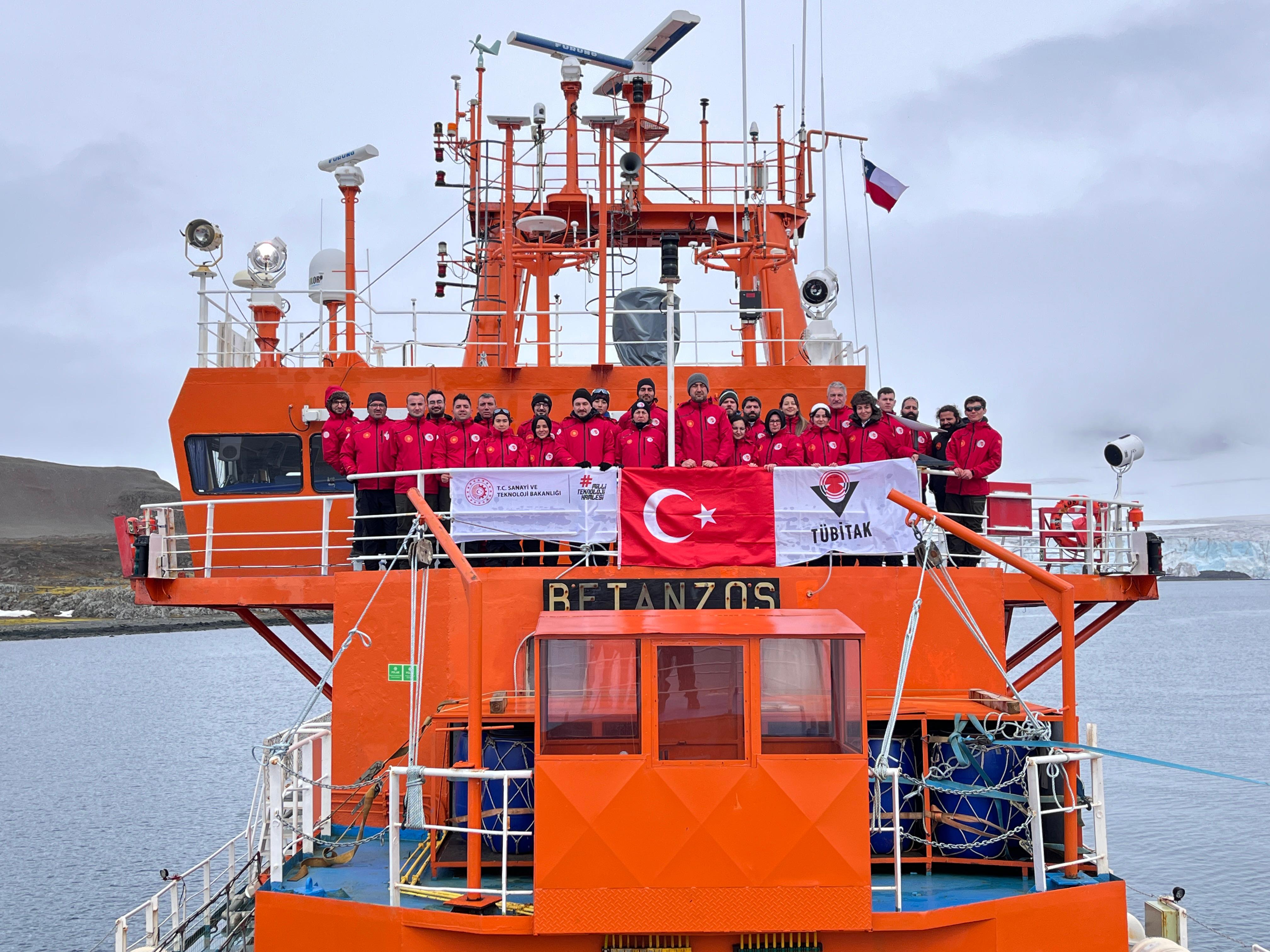
9. Ulusal Antarktika Bilim Seferi kapsamında yola çıkan Türk ekibi, 60 saat süren uzun yolculuğun ardından Antarktika King George Adası'na vardı. Cumhurbaşkanlığı himayelerinde, Sanayi ve Teknoloji Bakanlığı uhdesinde, TÜBİTAK MAM Kutup Araştırmaları Enstitüsü koordinasyonunda gerçekleşen 9. Ulusal Antarktika Bilim Seferi'ne katılan ekip, İstanbul'dan ayrıldıktan sonra Brezilya ve Şili üzerinden 103 enlem geçerek zorlu bir yolculuk yaptı.
Sanayi ve Teknoloji Bakanı Mehmet Fatih Kacır'ın katılımıyla İstanbul Havalimanı'nda düzenlenen törenle Beyaz Kıta'ya uğurlanan 20 kişilik ekip, 2,5 gün süren yolculuğun ardından Antarktika King George Adası'na vardı. Ada yakınlarında bulunan Şili bayraklı Betanzos isimli gemiye gelen bilim ekibi, toplu fotoğraf çektirdi. Yaklaşık 14 bin kilometre yol katederek adaya ulaşan bilim ekibi, buradan gemiyle önce Dismal Adası'na, daha sonra ise Türk bilimsel araştırma kampının bulunduğu Horseshoe Adası'na varmayı planlıyor.
Ekip, "bilim ve barış kıtası" olarak adlandırılan Antarktika'da yaşam bilimleri, sosyal bilimler, fiziki bilimler ve yer bilimleri gibi alanlarda 19 ayrı proje icra edecek.
"Türkiye'nin burada ayak izinin bulunması çok önemli"
Türk bilim heyetini, Şili'nin Santiago kentindeki Arturo Merino Benitez Uluslararası Havalimanı'nda, Türkiye'nin Santiago Büyükelçisi Ahmet İhsan Kızıltan ve Büyükelçilik personeli karşıladı. Büyükelçi Kızıltan, burada yaptığı açıklamada, Antarktika Bilim Seferi ekibini karşılamaktan dolayı duydukları memnuniyeti dile getirerek, "Antarktika her bakımdan büyük potansiyel arz eden bir kıta. Hem bilimsel hem de doğal kaynaklar açısından Türkiye'nin burada ayak izinin bulunması çok önemli. Yıllar içinde bu seferler sayesinde Türkiye'nin bilimsel kapasitesini gösterme imkanımız bulunuyor." dedi. Şili makamlarının bu çabalarını her zaman desteklediğini kaydeden ve bu nedenle onlara teşekkür eden Kızıltan, "Türkiye ile Şili arasındaki işbirliğinin ticari, ekonomik ve siyasi birçok boyutu var. Ancak bu bilimsel boyut ayrı bir özellik katıyor. Gelecekte de bu seferlerin devam etmesini, başka vesilelerle de bilimsel işbirliğimizin gelişmesini istiyoruz." diye konuştu.
"Kıtaya inmeden tüm eşyalarımızı dezenfekte ediyoruz"
9. Ulusal Antarktika Bilim Seferi Koordinatörü Prof. Dr. Burcu Özsoy da Antarktika'nın flora ve faunasının korunması ve kıtaya ait olmayan türlerin taşınmasını önlemek amacıyla birçok kural uygulandığını belirterek, "Bu kurallar kapsamında da tedbir alan sefer ekibi, uçaktan inerken botlarını özel solüsyonlarla dezenfekte ederek kıtaya ayak bastı." dedi. 9. Ulusal Antarktika Bilim Seferi Lider Yardımcısı Dr. Atilla Yılmaz ise uzun seyahatler ve aktarmalar sonucunda Antarktika King George Adası'na indiklerini kaydederek, bir önceki duraklarında valizlerini ve eşyalarını dezenfekte ettiklerini, bu sayede kıtaya herhangi bir yabancı canlı türü taşınmasının önüne geçmeyi amaçladıklarını söyledi.
Slide görseli
Applications for the 2025 1st Term of the 1001 - The Scientific and Technological Research Projects Funding Programme, carried out by the Directorate for Research Funding Programmes (ARDEB), can now be submitted through https://ardeb-pbs.tubitak.gov.tr as of 10 February 2025.
Revisions have been made on the application and evaluation forms of the programme. For applications to be evaluated, the updated application form and its attachments on the programme web page must be filled out and uploaded to the ARDEB Project Application System. Project proposals submitted with outdated application forms will not be evaluated and will be returned.
The deadline for online applications of project proposals to be submitted in the first term of 2025 has been determined as 27 March 2025, and the deadline for completing the e-signature process of the said projects has been determined as 03 April 2025.
Click here for the updated Application and Evaluation Forms for the 1001 Programme.
Araştırma Destek Programları Başkanlığı (ARDEB) tarafından yürütülmekte olan "1001-Bilimsel ve Teknolojik Araştırma Projelerini Destekleme Programı’nın 20205 yılı 1. dönem başvuruları 10 Şubat 2025 tarihi itibariyle ARDEB Proje Başvuru Sistemi adresi üzerinden alınmaya başlanmıştır.
Programın başvuru ve değerlendirme formlarında önemli değişiklikler yapılmıştır. Söz konusu programa yapılacak başvuruların değerlendirmeye alınabilmesi için programa ilişkin web sayfasında yer alan güncel başvuru formu ve eklerinin doldurularak ARDEB Proje Başvuru Sistemine yüklenmesi gerekmektedir. Güncel olmayan başvuru formları ile sunulan proje önerileri değerlendirmeye alınmayarak iade edilecektir.
2025 yılı 1. döneminde sunulacak proje önerilerinin çevrim içi başvuruları için son tarih 27 Mart 2025, söz konusu projelerin e-imza sürecinin tamamlanması için son tarih ise 03 Nisan 2025 olarak belirlenmiştir.
1001 Programına ilişkin güncel Başvuru ve Değerlendirme Formları için tıklayınız.
1001 - Call Text
Belge
Belge
1001 - Çağrı Dokümanları
Belge
Belge
With the new collaboration model launched with the Research Council of Norway (RCN), TÜBİTAK continues to strengthen its partnerships within the international research ecosystem. This model offers a more flexible and effective collaboration opportunity for researchers from both Türkiye and Norway.
According to this new collaboration model, researchers from Türkiye and Norway will be able to participate in projects as principal investigator and partner, with the principal investigator applying to relevant funding programmes determined by their respective national funding agencies. The funding agency receiving the application will evaluate the project through its own assessment processes. If the project is deemed successful, its expenses will be covered in accordance with the rules of the relevant funding programme.
Within this framework:
As part of the TÜBİTAK 1001 - Scientific and Technological Research Projects Support Programme, Norwegian researchers will be able to join projects submitted by Turkish principal investigators as project team members in calls to be opened under this collaboration model starting from the first term of 2025.
Turkish researchers, on the other hand, will be able to apply as project team members to the funding programmes determined by RCN.
This new model complements other regulations introduced by the TÜBİTAK Directorate of Research Funding Programmes (ARDEB) and the Department of International Cooperation (UİDB) for the purpose of facilitating international project collaborations (accessible here).
The opportunities provided by TÜBİTAK enhance the global competitiveness of scientific research in Türkiye. Moreover, this partnership with Norway expands the scientific interaction space for Turkish researchers and creates new international collaboration opportunities, thereby increasing the impact of projects. As a result, scientists from both countries will be able to develop joint projects, thereby mutually enhancing their research capacities and deepening scientific collaborations.
For inquiries regarding TÜBİTAK processes, you may contact ardeb-pbs@tubitak.gov.tr, and for inquiries related to RCN processes, please reach out to psp@forskningsradet.no.
TÜBİTAK, Norveç Araştırma Konseyi (RCN) ile başlattığı yeni iş birliği modeli ile uluslararası araştırma ekosistemindeki ortaklıklarını güçlendirmeye devam ediyor. Bu model, Türkiye ve Norveç’ten araştırmacılar için daha esnek ve etkin bir iş birliği fırsatı sunuyor.
Bu yeni iş birliği modeline göre; Türkiye ve Norveç’ten araştırmacılar, iş birliği yaptıkları araştırmacıların kendi ülkelerindeki fonlayıcı kuruluşun belirleyeceği destek programlarına yürütücü olarak sunacakları projelere, proje ekipleriyle birlikte katılım sağlayabilecektir. Başvurulan kuruluş, projeyi kendi değerlendirme süreçlerine göre inceleyecek ve proje başarılı bulunursa ilgili destek programı kuralları doğrultusunda proje giderlerini destekleyecektir.
Bu kapsamda:
TÜBİTAK 1001 - Bilimsel ve Teknolojik Araştırma Projelerini Destekleme Programı çerçevesinde, 2025 yılı 1. döneminden itibaren açılacak çağrılarda ilgili iş birliği modeli kapsamında Norveçli araştırmacılar Türkiye’deki yürütücülerin sunacağı projelere proje ekibi olarak dâhil olabileceklerdir.
Türkiye'deki araştırmacılar ise RCN tarafından belirlenecek destek programlarına proje ekibi olarak başvuruda bulunabilecektir.
Bu yeni model, TÜBİTAK Araştırma Destek Programları Başkanlığı (ARDEB) ile Uluslararası İşbirliği Daire Başkanlığı (UİDB) tarafından uluslararası iş birliklerini kolaylaştırmak amacıyla hayata geçirilen diğer düzenlemeleri (buradan ulaşabilirsiniz) tamamlar niteliktedir.
TÜBİTAK’ın sunduğu bu fırsatlar, Türkiye’deki bilimsel araştırmaların küresel ölçekteki rekabet gücünü artırmaktadır. Norveç ile kurulan bu ortaklık ayrıca, Türkiye’deki araştırmacılar için daha kapsamlı bir bilimsel etkileşim alanı ve yeni uluslararası ortaklık fırsatları sunarak projelerin etki alanını genişletecektir. Böylece iki ülkenin bilim insanları ortak projeler geliştirerek araştırma kapasitelerini karşılıklı olarak artıracak ve bilimsel iş birliklerini daha da derinleştirecektir.
Konuya ilişkin TÜBİTAK süreçleri ile ilgili sorularınızı ardeb-pbs@tubitak.gov.tr adresine, RCN süreçleri ile ilgili sorularınızı ise psp@forskningsradet.no adresine iletebilirsiniz.
As part of the 2202 - Science Olympiads Program conducted by the Scientific and Technological Research Council of Türkiye (TÜBİTAK), the goal is to train a highly qualified workforce in basic science programs and computer science in accordance with the country’s needs and priorities. The program is designed to encourage and guide students in these fields and prepare them for national and international science olympiads.
In this context, the 33rd Science Olympiad First Stage Exam will be held for students and teachers in the following disciplines:
Astronomy and Astrophysics
Computer Science
Biology
Geography
Physics
Chemistry
Mathematics
Middle School Computer Science
Middle School Mathematics
The exam will take place on 17 May 2025, in 81 provincial centres across Türkiye and in Lefkoşa, Turkish Republic of Northern Cyprus. (In case of force majeure preventing the exam from being conducted at the preferred exam centre, candidates may be assigned to the nearest available exam centre.)
Applications will be open from 11 February 2025, until 24 April 2025, at 17:30 (UTC+3) Individual applications must be submitted through https://e-bideb.tubitak.gov.tr.
Türkiye Bilimsel ve Teknolojik Araştırma Kurumu (TÜBİTAK) tarafından yürütülen 2202 - Bilim Olimpiyatları Programı kapsamında, ülkemizin ihtiyaç ve öncelikleri doğrultusunda temel bilimler ve bilgisayar alanlarında nitelikli insan kaynağı yetiştirilmesi hedeflenmektedir. Program, öğrencileri bu alanlarda çalışmalara teşvik etmek, yönlendirmek ve ulusal ve uluslararası bilim olimpiyatlarına hazırlamak amacıyla düzenlenmektedir.
Bu kapsamda, 33. Bilim Olimpiyatları Birinci Aşama Sınavı, öğrenciler ve öğretmenler için gerçekleştirilecektir.
Astronomi ve Astrofizik, Bilgisayar, Biyoloji, Coğrafya, Fizik, Kimya, Matematik, Ortaokul Bilgisayar, Ortaokul Matematik dallarında 17 Mayıs 2025 tarihinde 81 il merkezinde ve Kuzey Kıbrıs Türk Cumhuriyeti’nde (Lefkoşa) Bilim Olimpiyatları Birinci Aşama Sınavı düzenlenecektir. (Mücbir sebeplerle talep edilen sınav merkezinde sınav yapılamaması halinde tercih edilen sınav merkezine en yakın sınav merkezinde sınav yapılabilir)
11 Şubat 2025 tarihinde başlayan başvurular 24 Nisan 2025 17.30’a kadar devam edecektir. Başvurular bireysel olarak https://e-bideb.tubitak.gov.tr adresinden yapılacaktır.
Misyon
TÜBİTAK Temel Bilimler Araştırma Enstitüsü’nün misyonu dünyadaki temel bilim alanlarında yaşanan gelişmeler ışığında ve ülkemizin stratejik hedefleri göz önünde bulundurularak tanımlanmıştır:
- Temel bilim alanlarında öncü araştırmalar yapmak, bu araştırmaları disiplinler arası alanlara yaymak, bilime uluslararası düzeyde önemli katkılar sağlamak
- Yurt içinden ve yurt dışından lider bilim insanlarını enstitünün çatısı altında bir araya getirerek üst düzey bilimsel ortam oluşturmak, ülkemize rekabet gücü kazandırmak
- İleri düzey ve geniş yelpazede araştırma ve eğitim programları, araştırma yaz okulları ve çalıştaylar düzenlemek, ülkemizde uluslararası standartlarda yüksek lisans ve doktora öğrencilerinin yetiştirilmesine önemli katkılar sağlamak
- Toplum için bilim programları geliştirmek, ülkemizde bilim kültürünün yaygınlaşmasına ve bilim geleneğinin yerleşmesine önemli katkılar sağlamak
Vizyon
TÜBİTAK Temel Bilimler Araştırma Enstitüsü’nün vizyonu aşağıdaki ilkelere dayanmaktadır:
- Tüm bilimsel faaliyetleri ‘Bilimin Ufukları’ kapsamında sürdürmek, ülkemizde yapılan temel bilim araştırmalarının düzeyinin hızla yükselmesine önemli katkılar sağlamak
- Dünyanın önde gelen üniversitelerinden lider bilim insanlarının katkılarıyla araştırma yaz okulları, ileri düzey seminerler, çalıştaylar ve popüler konuşmalar düzenlemek
- Ulusal ve uluslararası düzeyde etkin işbirlikleri oluşturmak ve yarınların lider bilim insanlarını yetiştirmek
Sağlık Bilimleri
Doç. Dr. Ahmet Eken

Temel immünoloji, moleküler biyoloji alanlarında ve otoimmün ve primer immün yetmezlik hastalıklarının araştırılmasına yönelik uluslararası düzeyde üstün nitelikli çalışmaları nedeniyle TÜBİTAK Teşvik Ödülü verilmiştir.
Ana Bilim Dalı: Temel İmmünoloji, Tıbbi Biyoloji
Araştırma Alanları: İmmünoloji
Görev Yeri: Erciyes Üniversitesi Tıp Fakültesi Temel Tıp Bilimleri Bölümü
Daha fazla bilgi için: https://avesis.erciyes.edu.tr/ahmeteken
Doç. Dr. Yavuz Nuri Ertaş

Biyomedikal mühendisliği nanotıp alanında nanoparçacıklar ve biyomalzemeler kullanılarak etkinleştirilmiş kanser tedavisindeki uluslararası düzeyde üstün nitelikli çalışmaları nedeniyle TÜBİTAK Teşvik Ödülü verilmiştir.
Ana Bilim Dalı: Biyomedikal Mühendisliği
Araştırma Alanları: Hücre&Doku Mühendisliği, Biyomedikal Mühendislik, Çok Disipliner Malzeme Bilimi, Biyomateryaller, Nanobilim&Nanoteknoloji, Radyoloji, Nükleer Tıp&Medikal Görüntüleme
Görev Yeri: Erciyes Üniversitesi Mühendislik Fakültesi Biyomedikal Mühendisliği Bölümü
Daha fazla bilgi için: http://www.ertaslab.com
Doç. Dr. Fatih İnci

Biyoteknoloji, biyomedikal mühendisliği ve nanoteknoloji alanında hasta-başı tanı testleri, biyosensörler, mikroakışkanlar ve bunların klinik uygulamaları konularındaki uluslararası düzeyde üstün nitelikli çalışmaları nedeniyle TÜBİTAK Teşvik Ödülü verilmiştir.
Ana Bilim Dalı: Biyoteknoloji, Biyomedikal Mühendisliği, Nanoteknoloji
Araştırma Alanları: Biyoteknoloji ve Uygulamalı Mikrobiyoloji, Mühendislik, Biyotıp, Nanobilim ve Nanoteknoloji
Görev Yeri: İhsan Doğramacı Bilkent Üniversitesi Ulusal Nanoteknoloji Araştırma Merkezi (UNAM)
Daha fazla bilgi için: https://incilab.bilkent.edu.tr
Prof. Dr. İpek Süntar

Ülkemiz tıbbi bitkilerinin biyoaktiviteleri ve fitokimyasal özelliklerinin araştırılmasına yönelik uluslararası düzeyde üstün nitelikli çalışmaları nedeniyle TÜBİTAK Teşvik Ödülü verilmiştir.
Ana Bilim Dalı: Farmakognozi
Araştırma Alanları: Farmakoloji ve Eczacılık, Bitki Bilimleri, Tamamlayıcı ve Entegre Tıp, Kimya (tıbbi)
Görev Yeri: Gazi Üniversitesi Eczacılık Fakültesi Eczacılık Meslek Bilimleri Bölümü
Daha fazla bilgi için: https://orcid.org/0000-0003-4201-1325
Çağrının amacı, disiplinler arası uygulamaları kullanarak, ağrıdan etkilenen insanların yaşamlarını iyileştirme potansiyeli taşıyacak “Ağrı Sinirbilimi” hakkındaki bilgileri geliştirmeye yönelik kritik translasyonel ve klinik soruları ele alacak çok uluslu, işbirlikçi araştırma projelerini desteklemektir.
Kronik ağrı, farklı beyin bölgelerindeki yapısal ve fonksiyonel değişikliklerle ilişkilidir ve değişen nörotransmiter seviyeleriyle bağlantılıdır. Bu tür değişikliklere duygusal, bilişsel ve davranışsal bozulma da eşlik edebilir. Kronik ağrıdan etkilenen kişilerde depresyon ve anksiyete gibi zihinsel bozuklukların görülme riski artar ve bunun tersi de geçerlidir. Bu komorbiditelerin ortaya çıkması etkili ağrı yönetimini ve tedaviyi engellemektedir. Bu nedenle, ağrı araştırmaları alanında önemli ilerlemeler ancak klinik nöroloji ve psikiyatri, psikoloji, bilişsel sinirbilim, nörobiyoloji, fizyoloji, genetik veya farmakoloji gibi farklı disiplinler arasındaki koordineli iş birliği ile sağlanabilir.
Sadece uluslararası projeler finanse edilecektir. Bir öneri sunacak her konsorsiyumun, İngilizce çağrı metninde belirtilen kuruluşlar tarafından finanse edilen en az üç farklı ülkeden araştırma grubundan oluşması gerekmektedir. Bir konsorsiyumda araştırmagruplarının sayısı beşle sınırlıdır. En fazla iki araştırma grubu aynıülkeden olabilir. ERA-NET NEURON fonlamadüzeninde bugüne kadar daha az destek alan ülkelerden (Hırvatistan, Letonya, Litvanya, Macaristan, Romanya, Slovakya, Tayvan ve Türkiye) ortaklar dahil olmak üzere konsorsiyumlardaortak sayısı altıya artırılabilir.
Çıkılacak çağrı için ERA-NET NEURON Ortak Çağrı Sekreteryası tarafından iki aşamalı uluslararası değerlendirme yapılacaktır. İlk aşamada gelen ön önerilerden (pre-proposal) uluslararası dış danışman değerlendirmesi sonucunda başarılı olan adaylardan ikinci aşamada tam öneriler (full proposals) istenecektir.
Başvuru ile ilgili uluslararası ön duyuruya https://www.neuron-eranet.eu/joint-calls/bio-medical/2025-pain/ ağ sayfasından ve uluslararası ağ araçlarına ise https://www.neuron-eranet.eu/resource-hub/networking-tools/ ağ sayfasından erişebilirsiniz.
Başvuru ile ilgili detaylı bilgi ve ulusal ve uluslararası başvuru koşulları çağrının açılmasından sonra TÜBİTAK ana sayfasından tekrar paylaşılacaktır.
İlgili Kişi
Dr. Recep Emrah ÇEVİK
TÜBİTAK, Sağlık Bilimleri Araştırma Destek Grubu (SBAG)
Tel: 0 312 298 1214
e-posta: emrah.cevik@tubitak.gov.tr
TÜBİTAK tarafından düzenlenen 4. Kutup Şenliği, bilim insanlarının ve öğrencilerin katılımıyla gerçekleşti. Etkinlik, Türkiye'nin kutup araştırmalarına olan ilgisini artırmayı amaçlayarak, bilim dünyasında farkındalık yaratmayı hedefliyor. Şenlikte kutup bilimlerinin çeşitli yönleri ele alındı ve bu alandaki en son gelişmeler katılımcılarla paylaşıldı. 4. Kutup Şenliğinin açılış konuşmalarını TÜBİTAK Başkanı Prof. Dr. Orhan Aydın ve TÜBİTAK MAM Başkanı ve Kutup Araştırmaları Enstitüsü Müdürü Prof. Dr. Burcu Özsoy gerçekleştirdi.
Açılış oturumunun ardından, Okyanus On Yılı Resim Yarışması sonuçları ve ödül töreni düzenlendi. Katılımcılar, okyanusların çevresel sorunlarına ve okyanus bilimlerine dikkat çekmek amacıyla oluşturulan yarışmada, dereceye giren eserleri görme fırsatını buldu.
Şenliğin ilerleyen saatlerinde, Popüler Kutup Bilimleri oturumunda, kutup araştırmalarıyla ilgili güncel bilgiler ve yapılan çalışmalar masaya yatırıldı. Etkinlikte yer alan üç davetli konuşmacı Prof. Dr. Ersan Başar, Prof. Dr. Raif Kandemir, Doç. Dr. Mahmut Oğuz Selbesoğlu moderatör Dr. Sinan Yirmibeşoğlu eşliğinde, kutup biliminin farklı alanlarındaki araştırmalarını katılımcılarla paylaştı. Oturum sonunda, izleyiciden gelen sorular ile konuşmacılarla soru-cevap bölümü gerçekleştirildi.
TÜBİTAK’ın desteğiyle düzenlenen Belgesel/Vlog Gösterimleri oturumunda, kutup bölgesinin araştırma süreçlerini konu alan kısa belgeseller izleyicilerle buluşturuldu. Katılımcılar, kutup araştırmalarının zorlukları ve heyecan verici keşiflerine dair önemli bilgiler edindiler.
Türkiye’de 62’ilden 357 bildiri başvurusu yapılan çalışmada, 48 bildiri sözlü sunum, 35 bildiri poster sunumu olarak kabul edildi. Günün geri kalanında, K12 Kutup Bilimleri Sözlü ve Poster Sunumları yapıldı. Öğrenciler, kutup araştırmalarıyla ilgili bilimsel bildirilerini sözlü ve poster sunumlarıyla katılımcılara aktardılar. Bunun yanı sıra, 2204-C Kutup ve 2204-D İklim Değişikliği Araştırma Projeleri Oturumu ile geleceğin bilim insanları olan gençlerimiz, derece aldıkları projelerin sunumları ile iklim değişikliği ve kutup bölgesindeki etkilerini tartıştılar. Ayrıca, BİLSEM Oturumu, Kutup Oturumu ve K12 Oturumu gibi farklı oturumlarla da öğrencilere ve araştırmacılara bilimsel paylaşım fırsatları sunuldu. Ayrıca Poster oturumunda birbirinden önemli fikirler dijital ortamda dinleyiciler ile buluşturuldu.
TÜBİTAK'ın Bilim Genç kanallından canlı yayınlanan etkinlikler, Türkiye’nin farklı bölgelerinden katılım gösteren öğrencilere bilimsel dünyanın kapılarını açtı. İlk bölümde 2700 üzerinde dinleyici 4. Kutup Şenliğini ilgiyle takip etti. Etkinlik, bilimsel araştırmaların önemine dikkat çekerek, genç nesillerin kutup araştırmalarına ve çevre sorunlarına olan ilgisini artırmayı amaçlıyor.
Şenlik, geleceğin bilim insanlarını ve araştırmacılarını yetiştirmeye yönelik önemli bir platform sunuyor. Etkinlik, her yıl katılımcı sayısını artırarak, bilimin her alanında gelişimi teşvik etmeyi sürdürecek.
“Bilimi ve araştırmayı topluma daha fazla yaymayı hedefliyoruz”
Şenliğin açılış konuşmasını gerçekleştiren TÜBİTAK Başkanı Prof. Dr. Orhan Aydın, bilimsel araştırmaların önemini vurgulayarak, bu tür etkinliklerin küresel sorunlara çözüm bulma yolunda büyük bir öneme sahip olduğunu belirtti.
TÜBİTAK’ın, üniversiteler, sanayi ve kamu kurumlarıyla iş birliği yaparak, ülkemizin ihtiyaç duyduğu teknolojilerle ilgili araştırmaları desteklediğini belirten Aydın, küresel problemlere çözüm ararken, aynı zamanda Türkiye’nin bilimsel kapasitesini de güçlendirmeyi hedeflediklerini söyledi.
TÜBİTAK Başkanı, çocukların ve gençlerin bilime ilgilerini artırmak için bilim merkezleri, ortaokul ve lise öğrencilerine yönelik araştırma projeleri yarışmaları, atölyeler ve benzeri birçok etkinlik düzenlediklerini ve bu etkinlikleri daha da yaygınlaştırmaya çalıştıklarını kaydetti. Eğitimcilerin ve ailelerin de bu süreçteki katkılarının önemli olduğunu belirten Aydın, bu tür etkinliklerle bilimi ve araştırmayı topluma daha fazla yaymayı hedeflediklerini ifade etti.
Prof. Dr. Aydın, şenlikte yer alan tüm öğrencilere başarılar dileyerek, öğretmenlere ve ailelere teşekkür etti ve bu tür etkinliklerin artarak devam etmesi temennisinde bulundu.
TÜBİTAK MAM Başkan ve Kutup Araştırmaları Enstitüsü Müdürü Prof. Dr. Burcu Özsoy ise kutup çalışmalarına ilişkin bilgi verdi. Ulusal Kutup Seferlerinin sonuçları, güncel kutup çalışmaları, geçmiş Kutup Şenlikleri konularında sunum gerçekleştiren Prof. Dr. Özsoy, geleceğin bilim insanlarını kutup bilimleri ile buluşturdu. Sunumunda Enstitünün eğitim ve farkındalık görevinin öneminden bahsederken, kutup bilimlerinde genç neslin oluşturduğu projelere de yer verdi.
Slide görseli
Companies established with TÜBİTAK BiGG support at the pre-seed stage will have the opportunity to reach the seed investment through the TÜBİTAK BiGG+ Venture Capital Investment Fund. TÜBİTAK will contribute to the technological development of ventures and value-added growth strategies by creating joint investment opportunities for stakeholders in the entrepreneurship ecosystem with this Fund.
Under the Law No. 4691 on Technology Development Zones and the Law No. 5746 on Supporting Research, Development, and Design Activities, if the amount of discount utilized in software, design, and R&D activities developed in Technology Development Zones exceeds 2 Million TL, it is mandatory to transfer 3% of that amount to venture companies, venture capital investment partnerships, or venture capital investment funds by the end of the year through the methods specified in the law.
In order to fulfill the investment obligation of R&D incentives and to benefit from other tax advantages provided for VCIF investments, TÜBİTAK BiGG+ VCIF invites institutional investors who want to invest in TÜBİTAK-supported technology companies to join the Fund.
| Fund Name | TÜBİTAK BiGG+ Venture Capital Investment Fund |
| First Closing | Date of sale of the first participation share |
| Investor Acceptance Period | 5 years from the date of first closing |
| Due Date | 10 years from the date of first closing |
| Investment Period | 5 years from the first closing date |
| Participation Share Minimum Transaction Limit | 50.000 USD |
| Management Fee | 2% until the end of the investment period 1% from the end of the investment period until the end of the fund period |
For more detailed information about TÜBİTAK BiGG+ GSYF, you can send us your contact information from the link below. (in Turkish)
https://anket.tubitak.gov.tr/index.php/251237?lang=tr
Announcements regarding the calls to be opened to determine the initiatives in which TÜBİTAK BiGG+ VCIF will invest will be made in the coming days.
You can send your questions and opinions to the e-mail address bigg.arti@tubitak.gov.tr.
Tohum öncesi aşamada TÜBİTAK BiGG desteği ile kurulan şirketler, Kalkınma Girişim Sermayesi A.Ş. TÜBİTAK BiGG+ Girişim Sermayesi Yatırım Fonu ile bir sonraki tohum yatırımına ulaşma imkânı bulabilecek. TÜBİTAK, bu Fon ile girişimcilik ekosistemindeki paydaşlara ortak yatırım fırsatları oluşturarak girişimlerin teknolojik gelişimine ve katma değerli büyüme stratejisine katkı sağlayacak.
4691 sayılı Teknoloji Geliştirme Bölgeleri Kanunu ile 5746 sayılı Araştırma, Geliştirme ve Tasarım Faaliyetlerinin Desteklenmesi Hakkında Kanun kapsamında Teknoloji Geliştirme Bölgelerinde geliştirilen yazılım, tasarım ve Ar-Ge faaliyetleri alanında yararlanılan indirim tutarının 2 Milyon TL üzerinde olması durumunda, söz konusu tutarın %3’ü oranında yılsonuna kadar kanunda belirtilen yöntemler aracılığıyla girişim şirketlerine, girişim sermayesi yatırım ortaklıkları ya da girişim sermayesi yatırım fonlarına aktarılması zorunluluğu getirilmiştir.
Ar-Ge teşvikleri yatırım yükümlülüğünü yerine getirmek ve GSYF yatırımları için sağlanan diğer vergi avantajlarından faydalanmak üzere, Kalkınma Girişim Sermayesi A.Ş. TÜBİTAK BiGG+ GSYF, TÜBİTAK destekli teknoloji şirketlerine yatırım yapmak isteyen kurumsal yatırımcıları da Fona katılmaya davet ediyor.
| Fon Adı | TÜBİTAK BiGG+ Girişim Sermayesi Yatırım Fonu |
| İlk Kapanış | İlk katılma payı satış tarihi |
| Yatırımcı Kabul Dönemi | İlk kapanış tarihini takip eden 5 yıl |
| Fon Süresi | İlk kapanış tarihinden itibaren 10 yıl |
| Yatırım Dönemi | İlk kapanış tarihinden itibaren 5 yıl |
| Katılma Payı Asgari İşlem Limiti | 25.000 ABD Doları |
| Yönetim Ücreti | Yatırım döneminin sonuna kadar %2 Yatırım döneminin sonundan fon süresinin sonuna kadar %1 |
TÜBİTAK BiGG+ GSYF konusunda daha detaylı bilgi almak için iletişim bilgilerinizi aşağıdaki bağlantıdan bize gönderebilirsiniz.
https://anket.tubitak.gov.tr/index.php/251237?lang=tr
TÜBİTAK BiGG+ GSYF’nin yatırım yapacağı girişimlerin belirlenmesi amacıyla açılacak çağrılara ilişkin duyurular önümüzdeki günlerde yapılacaktır.
Sorularınızı ve görüşlerinizi bigg.arti@tubitak.gov.tr e-posta adresine iletebilirsiniz.
The Technology and Innovation Support Programmes Directorate (TEYDEB) conducts the 1501-Industrial R&D Projects Grant Programme and the 1507-SME R&D Startup Grant Programme to support the project-based research, technology development, and innovation activities of Small and Medium-Sized Enterprises. Two calls are opened each year under these programs.
Applications for the TEYDEB 1501-Industrial R&D Projects Grant Programme and the 1507-SME R&D Startup Grant Programme for the first period of 2025 will start to be accepted as of 02.01.2025 through https://eteydeb.tubitak.gov.tr.
1507-SME R&D Startup Grant Programme
Opening Date | 02.01.2025 |
Enterprises Pre-Registration Application Deadline1, 2 | 17.03.2025 (Saat 23:59) |
Closing Date3 | 19.03.2025 (Saat 23:59) |
1501-Industrial R&D Projects Grant Programme Call
Opening Date | 02.01.2025 |
Enterprises Pre-Registration Application Deadline1, 2 | 24.03.2025 (Saat 23.59 ) |
Closing Date3 | 26.03.2025 (Saat 23:59) |
Notes:
1. In order to apply, an organization-based pre-registration application must be submitted to TUBITAK. The specified date is the deadline for sending the organization-based pre-registration application to TÜBİTAK via PRODİS. Pre-registration documents must reach TUBITAK at least one business day before the call closing date. If pre-registration approval cannot be given due to deficiencies in organization-based pre-registration documents, the responsibility belongs to the organization. There is no need to wait for the call opening date for organization-based pre-registration. For this reason, companies planning to apply for the call are recommended to carry out organization-based pre-registration without wasting time.
2. Organizations that have previously received organization-based pre-registration approval will not pre-register on an organization basis again and will not send pre-registration documents.
3. This is the deadline for project proposals to be sent via PRODİS. Organization-based pre-registration approval must be obtained for submission. IMPORTANT REMINDER: Since the project proposals will be sent with e-signature, the e-signature must be provided or, in case of e-signature, the e-signature validity periods must be checked, and the e-signature must be renewed if the e-signature expires until the call closing date.
Prof. Dr. David J. Nagel, fizik ve mühendislik alanlarında uzman bir bilim insanıdır. Kariyerinde özellikle malzeme bilimi, uygulamalı fizik ve yoğun madde nükleer bilimi alanlarında çalışmalarıyla tanınmıştır. Amerikan Donanması Araştırma Laboratuvarı'nda uzun yıllar araştırmacı olarak görev yapmış ve savunma teknolojileri ile temel bilim araştırmalarına önemli katkılarda bulunmuştur. Amerikan Donanması Araştırma Laboratuvarı’ndan ayrıldıktan sonra, George Washington Üniversitesi’nde araştırma profesörü olarak görev yapmış ve yenilikçi enerji teknolojileri, özellikle düşük enerjili nükleer reaksiyonlar alanında çalışmalarını sürdürmüştür. Nagel, bu alanda bilimsel metodolojiye verdiği önemle ve uluslararası iş birlikleriyle tanınmaktadır.
Çok sayıda bilimsel makale ve sunumla, hem akademik hem de endüstriyel çevrelerde önemli bir figür haline gelmiştir. Enerji teknolojileri ve malzeme bilimi konularına ilgi duyanlar için ilham verici bir kariyere sahiptir.
Katılımcı Araştırmacı destek miktarı; doktorasını tamamlamış olanlar için aylık 32.000 TL, doktora öğrencileri için aylık 24.000 TL, yüksek lisans öğrencileri için 16.500 TL olarak belirlenmiştir. Ayrıca Katılımcı Araştırmacılar TBAE’nin Yemek ve Ulaşım hizmetlerinden yararlanabilecektir.
Söz konusu katılım TBAE’nin araştırma alanları; Astronomi, Astrofizik, Kuantum Fiziği, Kozmoloji, Genel Görelilik, Uygulamalı Matematik, Matematiksel Fizik, Fotonik, Parçacık Fiziği, Nükleer Fizik, Biyoenformatik, Biyoloji ve Genetik, Hesaplamalı Bilimler, Kuantum Kimyası temelinde gerçekleşecektir. Bu katılıma ilişkin ilke ve kurallar Katılımcı Araştırmacı Çağrı Duyurusu ile belirlenmiştir.
Katılımcı Araştırmacı Çağrı Duyurusu (Pdf)
Son Başvuru Tarihi: Açık pozisyonlar dolana kadar
SIKÇA SORULAN SORULAR
With this support model, it is aimed for customer organizations that need artificial intelligence solutions to produce solutions by forming consortiums with at least one company as a technology provider, at least one university research laboratory/centre or public research centre/institute experienced in this field, and the TÜBİTAK Artificial Intelligence Institute.
We congratulate our organizations whose projects were included in the scope of support, and we would like to remind our organizations whose projects were rejected that they can revise their applications and submit them to TÜBİTAK's appropriate support programs.
We would like to thank our Board members and referees who took part in the evaluation processes of the projects for their valuable contributions.
Companies can access the latest status of their project proposals from the project information page at eteydeb.tubitak.gov.tr.
The scope of support for the accepted projects will be sent to the organizations' KEP addresses, and the contracts, with wet signatures, will be sent to the mailing addresses of the customer organizations by courier. For rejected projects, reasoned rejection decisions will be sent to the KEP addresses of the organizations.